
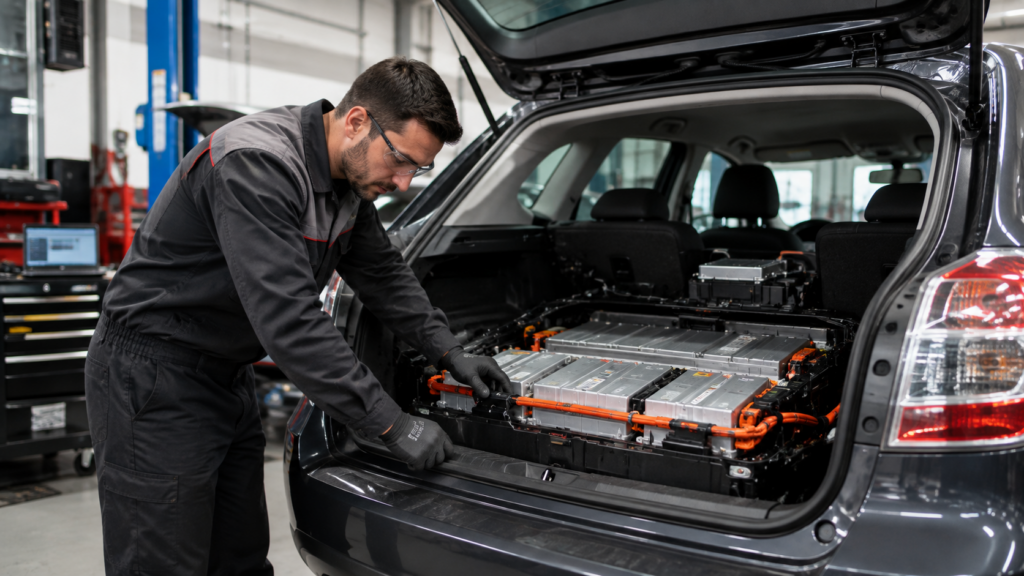
Hybrid vehicles combine gasoline engines with electric motors to improve fuel efficiency and reduce emissions. While they share some similarities with traditional vehicles, hybrid cars require different maintenance approaches because they use advanced battery systems, regenerative braking technology, and complex electronic controls.
Understanding hybrid vehicle maintenance helps drivers recognize what services their vehicles need and why specialized diagnostics are becoming more important in modern automotive repair.
What Makes Hybrid Vehicle Maintenance Different?
Traditional gasoline vehicles rely primarily on an internal combustion engine, while electric vehicles use battery-powered motors. Hybrid vehicles combine both technologies, creating a unique maintenance process.
A hybrid system includes several major components:
- Gasoline engine
- Electric motor
- Hybrid battery pack
- Power control unit
- Regenerative braking system
- Advanced computer controls
Because these systems work together, diagnosing problems requires both mechanical knowledge and electronic testing equipment.
The U.S. Department of Energy explains that hybrid vehicles use electric motors and gasoline engines together to improve efficiency compared with conventional vehicles.
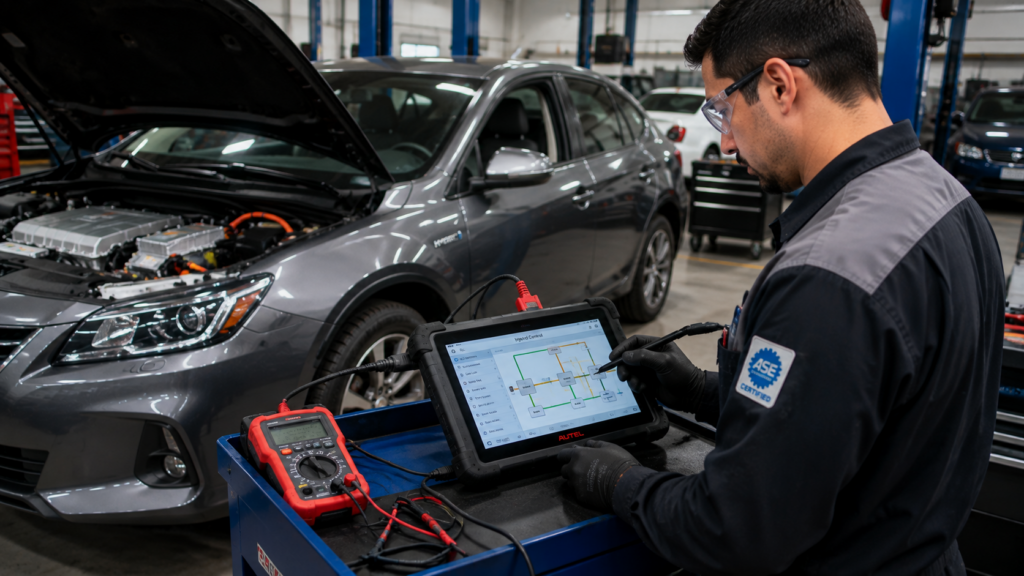
Hybrid Battery Maintenance and Inspections
The hybrid battery is one of the most important components in a hybrid vehicle. Unlike a traditional car battery that starts the engine, a hybrid battery helps power the electric motor and supports fuel-saving technology.
Hybrid batteries are designed to last many years, but regular inspections can help identify potential issues before they affect vehicle performance.
Technicians may check:
- Battery performance levels
- Charging and discharging patterns
- Temperature control systems
- Electrical connections
- Battery management software
Modern diagnostic tools allow technicians to monitor battery health and identify irregular performance patterns.
Do Hybrid Vehicles Need Oil Changes?
Yes, hybrid vehicles still use gasoline engines, which means they require oil changes. However, some hybrids may require less frequent oil changes compared with traditional vehicles because the gasoline engine does not operate continuously.
The vehicle’s computer system determines when the engine operates based on driving conditions, battery charge levels, and power demands.
Following the manufacturer’s maintenance schedule remains an important part of keeping the engine operating properly.
You can also learn more about general vehicle care in our guide on automotive maintenance services.
Regenerative Braking Changes Brake Maintenance
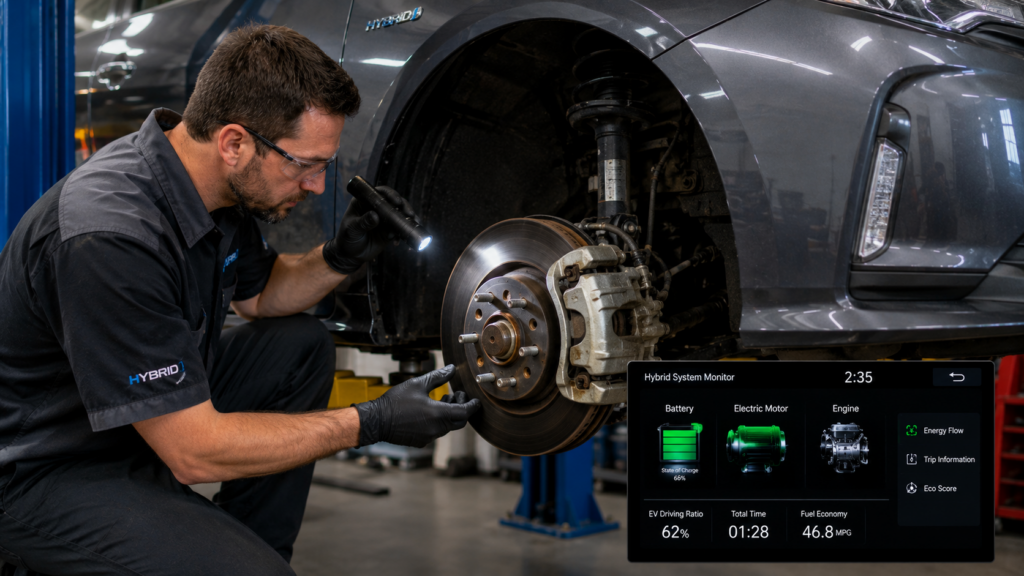
One major difference between hybrid vehicles and traditional cars is regenerative braking. This technology allows the electric motor to recover energy when the vehicle slows down.
Because regenerative braking reduces reliance on traditional friction brakes, hybrid vehicles may experience less brake pad wear compared with gasoline-only vehicles.
However, brake inspections are still necessary. Brake components can develop issues from age, corrosion, or reduced use.
Hybrid Vehicles Require Advanced Diagnostics
Hybrid systems depend heavily on computer controls. When warning lights appear, the cause may involve electrical components, software issues, battery systems, or mechanical parts.
Advanced diagnostic equipment helps technicians identify problems more accurately by communicating with the vehicle’s onboard computers.
Common hybrid diagnostic issues include:
- Battery performance warnings
- Charging system problems
- Electrical connection faults
- Cooling system concerns
- Hybrid system error messages
The National Highway Traffic Safety Administration provides safety information about hybrid and electric vehicle technologies as these systems continue becoming more common.
How Hybrid Vehicles Compare With Electric Vehicles
Hybrid vehicles and electric vehicles both use electric motors, but their maintenance needs are different.
Electric vehicles do not use gasoline engines, meaning they do not require traditional engine services such as oil changes. Hybrid vehicles still include combustion engines, which means they require a combination of electric and mechanical maintenance.
Hybrid owners may need services related to:
- Engine maintenance
- Battery inspections
- Electrical diagnostics
- Brake system checks
- Cooling system service
For comparison, explore our article about electric vehicle maintenance and modern vehicle technology.
Signs Your Hybrid Vehicle May Need Service
Hybrid vehicles often provide warning signs when something requires attention. Drivers should pay attention to changes in performance or dashboard alerts.
Possible signs include:
- Reduced fuel efficiency
- Battery warning lights
- Unusual engine operation
- Electrical system alerts
- Changes in braking performance
Addressing these concerns early may help prevent more complicated repair issues.
The Future of Hybrid Vehicle Repair
Hybrid technology continues evolving as automakers improve battery systems, electric motors, and vehicle software. Repair shops are adapting by investing in advanced diagnostic equipment and technician training.
As more hybrid vehicles remain on the road, specialized maintenance knowledge becomes increasingly valuable.
According to Insurance Institute for Highway Safety, hybrid and electric vehicle technology continues expanding across the automotive market.
Final Thoughts
Hybrid vehicle maintenance requires a combination of traditional automotive service and advanced electrical diagnostics. While hybrid vehicles may reduce fuel consumption and improve efficiency, they still need regular inspections and proper care.
Working with a repair shop familiar with modern vehicle technology helps drivers maintain their hybrid vehicles and understand their unique service requirements.
For additional automotive information, visit trusted resources such as Consumer Reports Hybrid and EV Guide and Edmunds Hybrid Vehicle Resources.