
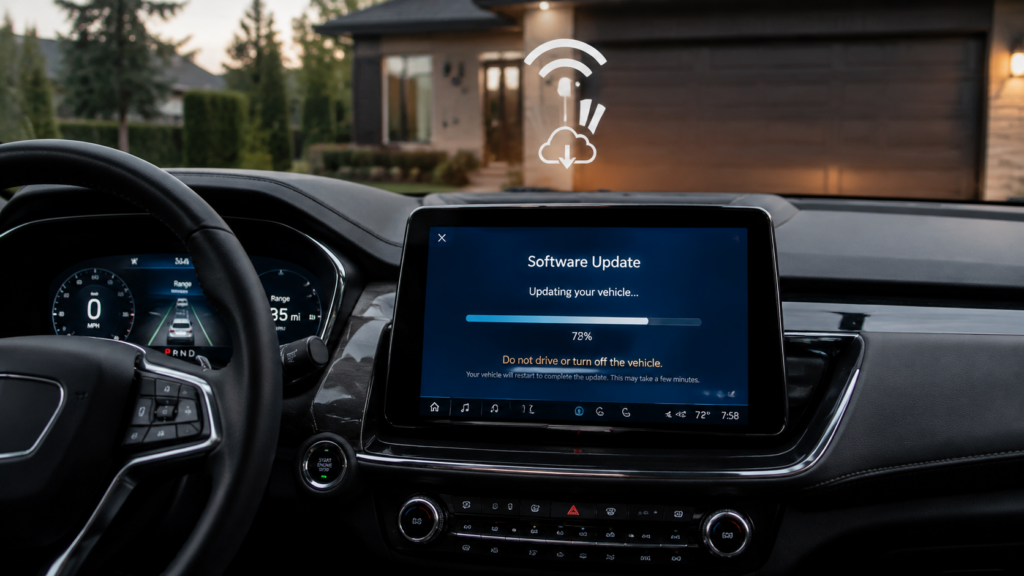
Modern vehicles are no longer just mechanical machines. They are now software-driven systems that receive updates just like smartphones. These updates are called Over-the-Air (OTA) updates, and they are changing how cars are maintained, diagnosed, and repaired.
While OTA updates can improve performance, fix bugs, and even add new features, they can also introduce unexpected issues. For both drivers and repair shops, understanding how OTA technology works is becoming essential.
What Are OTA Updates in Vehicles?
OTA updates allow manufacturers to send software updates directly to a vehicle without requiring a physical visit to the dealership or repair shop. These updates can modify everything from infotainment systems to safety features and engine performance.
According to the National Highway Traffic Safety Administration, OTA technology is becoming a key part of modern vehicle safety and functionality.
Manufacturers like Tesla, Ford, GM, and BMW regularly use OTA updates to improve vehicle performance remotely.
Why OTA Updates Matter for Car Owners
For drivers, OTA updates offer convenience and improved functionality. However, they can also cause confusion when vehicle behavior changes unexpectedly after an update.
Common OTA update changes include:
- Adjustments to driver assistance systems (ADAS)
- Battery management improvements in EVs
- Infotainment system upgrades
- Changes to acceleration or braking response
- Bug fixes for electronic systems
Learn more about related vehicle systems in our guide on modern vehicle diagnostics.
How OTA Updates Affect Auto Repairs
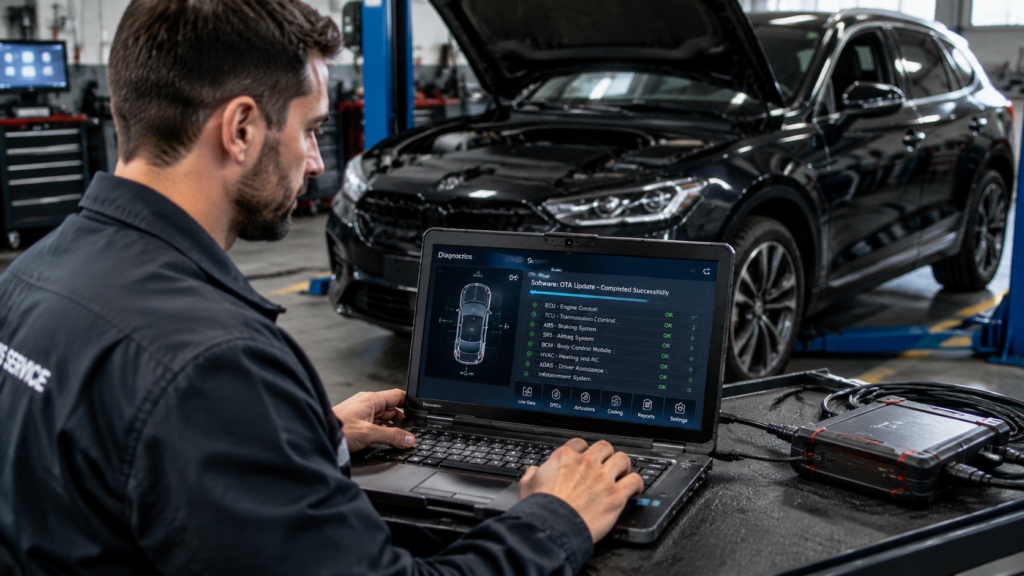
OTA updates are creating new challenges for mechanics and repair shops. In the past, diagnosing a car problem meant focusing on physical components. Now, software issues can mimic mechanical failures.
For example, a braking issue might not be caused by worn parts but by a recent software update that changed system calibration. This makes accurate diagnostics more complex and requires advanced tools and training.
The SAE International notes that vehicles are increasingly becoming “software-defined,” meaning updates can significantly alter how systems behave.
Risks and Challenges of OTA Updates
While OTA updates provide benefits, they also introduce potential risks:
- Unexpected system behavior after updates
- Temporary loss of features during installation
- Compatibility issues with older hardware
- Security vulnerabilities if updates fail
- Confusion between hardware and software faults
Because of these risks, proper diagnostics and professional evaluation are critical after major updates.
Read more about system reliability from Consumer Reports.
OTA Updates in Electric Vehicles
Electric vehicles are especially dependent on OTA updates. These updates often improve battery efficiency, charging speed, and driving range.
However, EV owners sometimes notice changes in range or performance after an update. This is often due to new battery management algorithms rather than hardware failure.
Explore related EV care topics in our article on electric vehicle maintenance.
How Repair Shops Are Adapting
Modern repair shops must now combine mechanical expertise with software diagnostic skills. Technicians use advanced scanners and manufacturer software portals to interpret post-update vehicle behavior.
Key adaptations include:
- Training in software diagnostics and coding systems
- Using OEM-approved diagnostic tools
- Staying updated with manufacturer release notes
- Performing recalibrations after software updates
Learn more about general service standards in our about us page.
Security and Cyber Risks
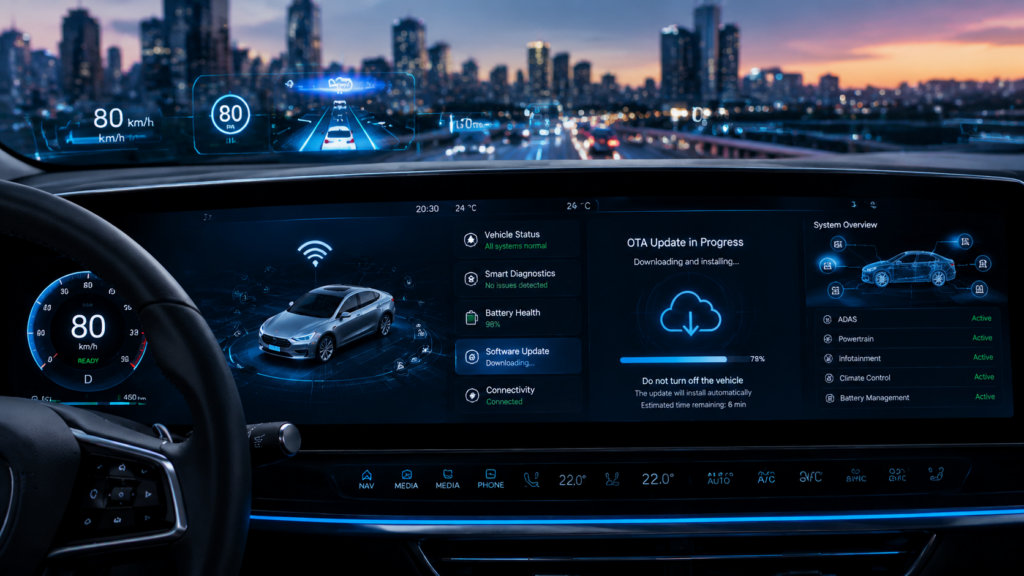
As vehicles become more connected, cybersecurity becomes a major concern. OTA systems must be protected from unauthorized access and malicious attacks.
The U.S. Environmental Protection Agency also notes that connected vehicle systems must meet strict efficiency and emissions standards, many of which depend on secure software updates.
Manufacturers are investing heavily in encryption and secure update protocols to prevent system tampering.
Future of OTA Technology
The future of OTA updates goes beyond simple software patches. Automakers are moving toward fully software-defined vehicles where performance, safety, and even driving behavior can be updated remotely.
This means vehicles may improve over time without visiting a shop—but it also means repair professionals must continuously adapt.
According to Edmunds, OTA updates will become standard in nearly all new vehicles within the next decade.
Final Thoughts
Over-the-Air updates are transforming the automotive industry. While they bring convenience and innovation, they also introduce new complexities for diagnostics and repair.
Understanding how OTA updates affect your vehicle can help you make better maintenance decisions and avoid unnecessary repairs.
As technology continues to evolve, choosing a knowledgeable and well-equipped repair shop will become more important than ever.
Stay informed and keep your vehicle performing at its best with professional maintenance and expert diagnostics.