
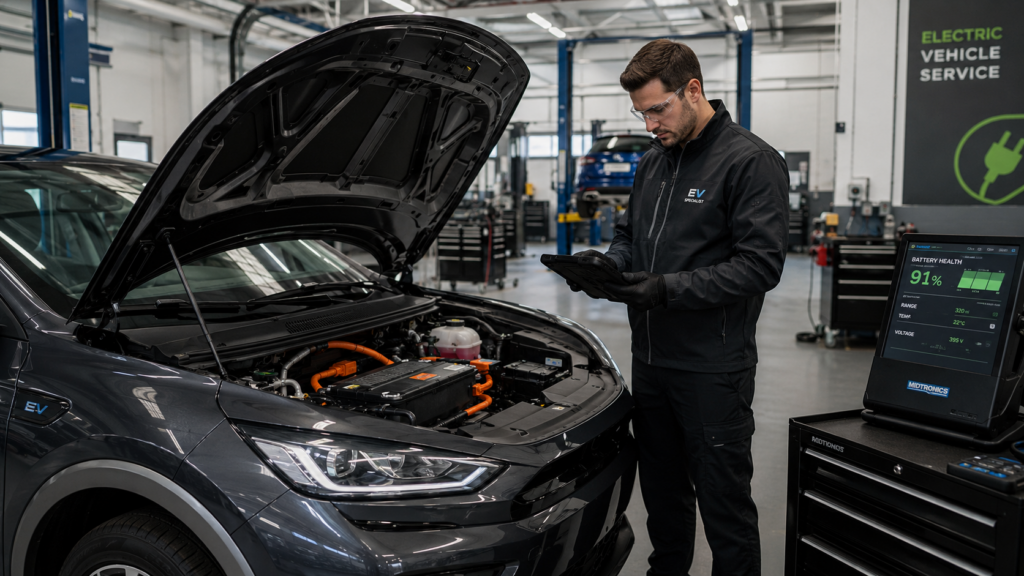
Electric vehicles (EVs) are rapidly becoming a major part of the automotive landscape. Unlike traditional gas-powered cars, EVs have unique systems that require specialized knowledge for maintenance and repair. Understanding these differences helps keep your vehicle safe, efficient, and reliable for years to come.
EVs operate using large lithium-ion batteries, electric motors, and sophisticated software systems. Routine maintenance for an EV differs significantly from conventional vehicles, primarily because EVs have fewer moving parts but more advanced electronics.
Key Differences Between EVs and Traditional Vehicles
Some of the most important differences that impact maintenance include:
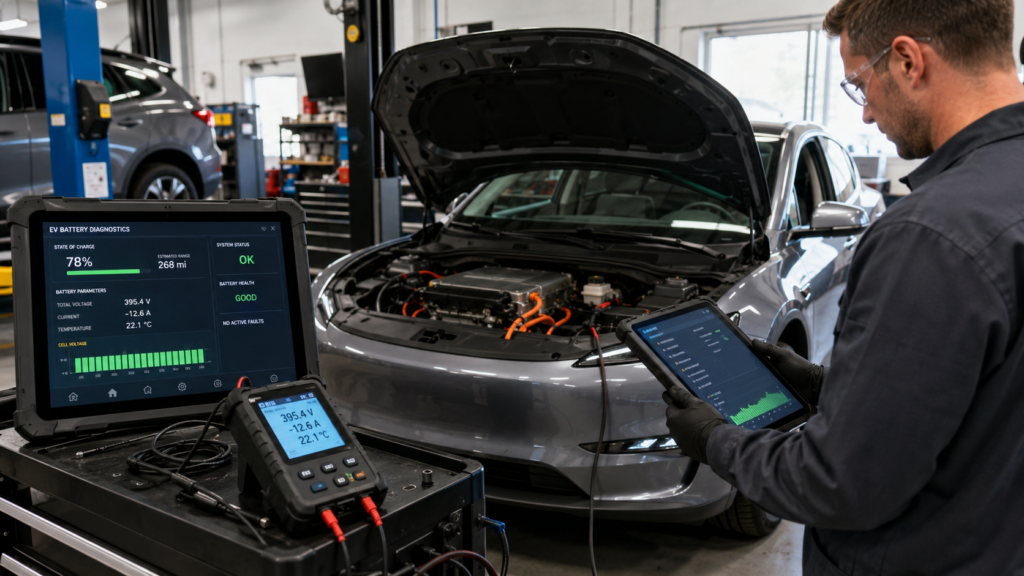
- Battery Health: EV batteries are expensive and sensitive to temperature. Proper charging habits and periodic inspections are essential.
- Regenerative Braking: This system reduces wear on traditional brake pads but requires specialized diagnostics to ensure proper function.
- Electric Motors: Fewer mechanical components mean fewer oil changes and engine maintenance, but the motor and inverter require periodic inspections.
- Software Updates: EVs rely on software for efficiency and safety. Regular updates can improve performance and battery life.
According to the U.S. Department of Energy, EV maintenance often costs less annually than gas vehicles, but battery care and diagnostics are critical.
Routine EV Maintenance Checks
Technicians trained in EV systems perform specific checks to maintain vehicle performance:
- Battery state-of-charge and temperature monitoring
- Inspecting electrical connections for corrosion
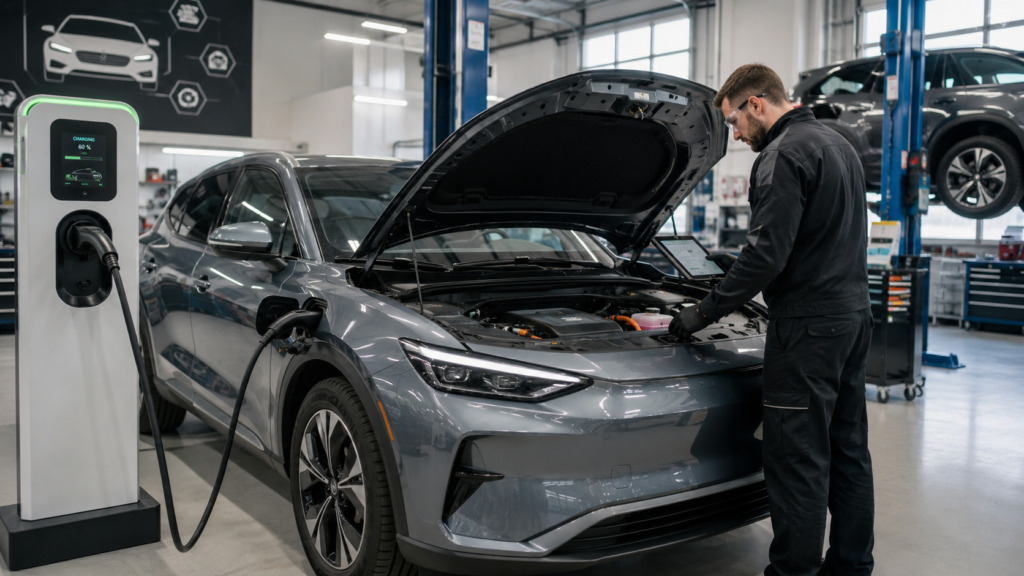
- Testing charging equipment
- Checking tire wear and brake system condition
- Ensuring onboard software is updated and calibrated
Common EV Repairs
While EVs reduce engine-related repairs, certain issues may require attention:
- Battery replacement or module repair
- Software glitches or updates
- Charging port malfunctions
- Cooling system failures for battery packs
- Suspension and brake system adjustments due to vehicle weight
For more on diagnostics and repair, see our guide on advanced vehicle diagnostics.
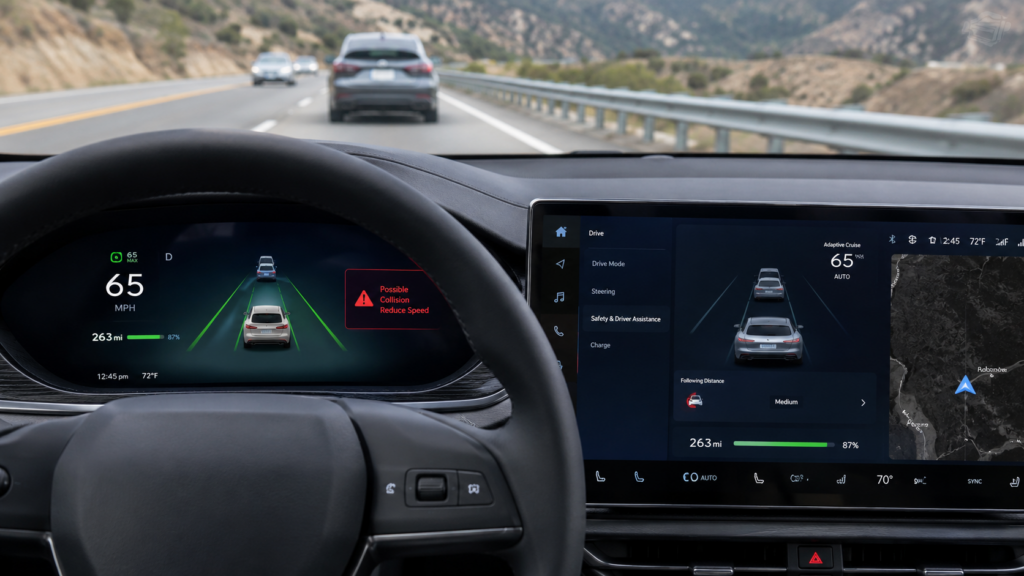
ADAS in Electric Vehicles
Many modern EVs include Advanced Driver Assistance Systems (ADAS), such as lane assist, collision avoidance, and adaptive cruise control. Proper maintenance ensures these systems function correctly. Repairs may include sensor calibration or software updates.
Tips for EV Owners
Maintaining your EV doesn’t have to be complicated:
- Follow manufacturer-recommended charging practices
- Schedule periodic battery inspections
- Keep tires properly inflated and check brake pads
- Keep the vehicle’s software up to date
- Choose a repair shop trained in EV service
Check out our article on routine maintenance tips to complement your EV care routine.
Environmental and Cost Benefits
EVs are not only eco-friendly but often have lower long-term maintenance costs. Fewer oil changes, reduced brake wear, and regenerative braking contribute to savings. However, battery care and specialized diagnostics are vital to avoid costly issues.
For further reading, refer to trusted sources like Consumer Reports EV Guide and Edmunds Electric Vehicle Tips.
Final Thoughts
Understanding EV maintenance is essential for long-term performance, safety, and efficiency. By staying informed and choosing a qualified repair shop, you can enjoy the full benefits of your electric vehicle while minimizing potential issues.